Mini Excavator Safety Features Every Buyer Should Check
Mini Excavator Safety Features Every Buyer Should Check
Mini excavators are some of the most useful machines on modern jobsites. They are compact, powerful, and versatile enough to handle digging, trenching, grading, landscaping, utility work, and light demolition. Their smaller size makes them easier to use in tight areas, backyards, residential zones, and narrow access spaces where larger equipment cannot work as easily.
But even though they are compact, mini excavators are still heavy machines with real jobsite risks.
A mini excavator can tip over, strike underground utilities, hit nearby workers, or cause serious damage if it is used carelessly or if important safety systems are ignored. That is why buyers should never focus only on engine power, digging depth, or price. Safety features matter just as much.
If you are buying a mini excavator, whether new or used, you should know exactly which safety features to check and why they matter. In this guide, we will break down the key safety features every buyer should look for, explain why they are important, and cover the best safety practices that go with them.
Need compact equipment or support? Request a quote or Visit American Excavators.
Why Mini Excavator Safety Features Matter
A mini excavator is designed to make difficult work easier, but the machine only stays safe when the operator, equipment, and jobsite all work together. Good safety features help reduce the risk of accidents, protect the operator, and improve control during daily use.
They also matter for more than just injury prevention.
Strong safety systems can help reduce equipment damage, lower downtime, improve operator confidence, and support compliance with jobsite safety standards. For contractors and fleet owners, safety also affects insurance, reputation, and long-term operating cost.
In short, safety features are not optional extras. They are part of what makes a mini excavator truly reliable.
What Mini Excavator Safety Really Means
Mini excavator safety is not just one switch, one alarm, or one protective frame. It is a combination of machine design, operator awareness, maintenance habits, and jobsite planning.
That includes:
- Built-in machine safety features
- Proper operator training
- Routine inspections
- Safe worksite setup
- Clear communication with nearby workers
- Correct use of attachments and controls
A buyer should think about safety as a complete system, not just a checklist.
Safety Features Every Buyer Should Check
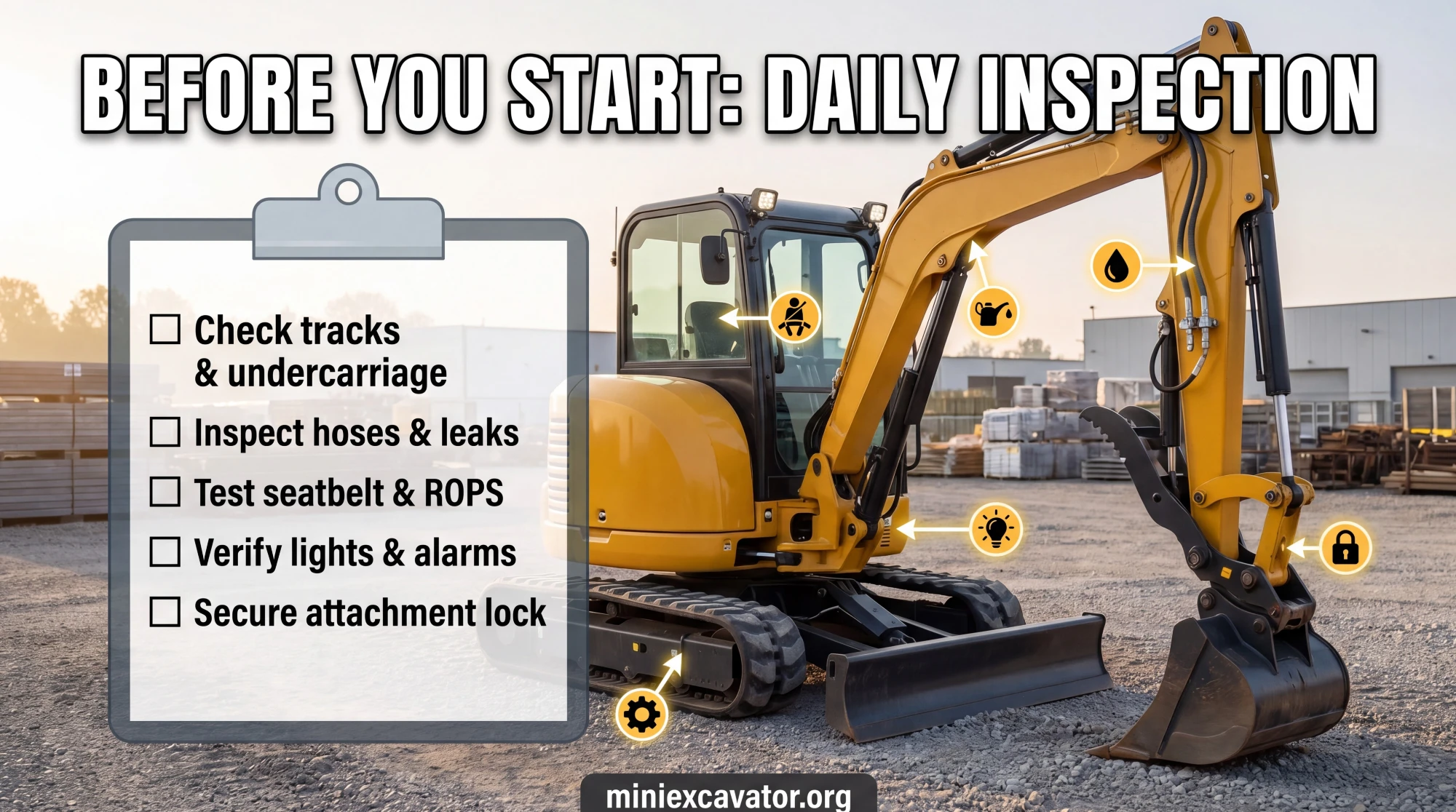
Before you buy, you can also compare your process with this daily mini excavator inspection guide to understand what should normally be checked before operation.
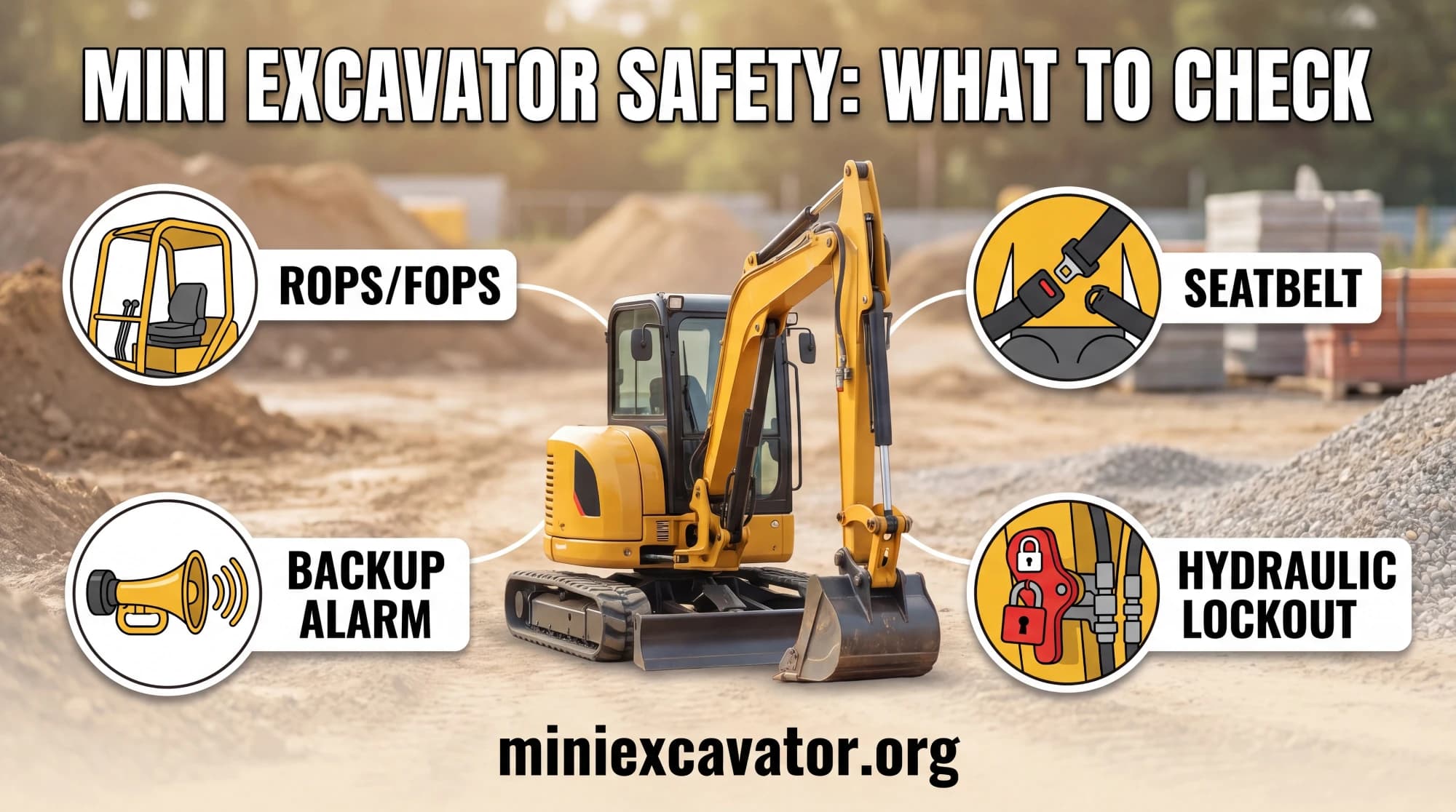
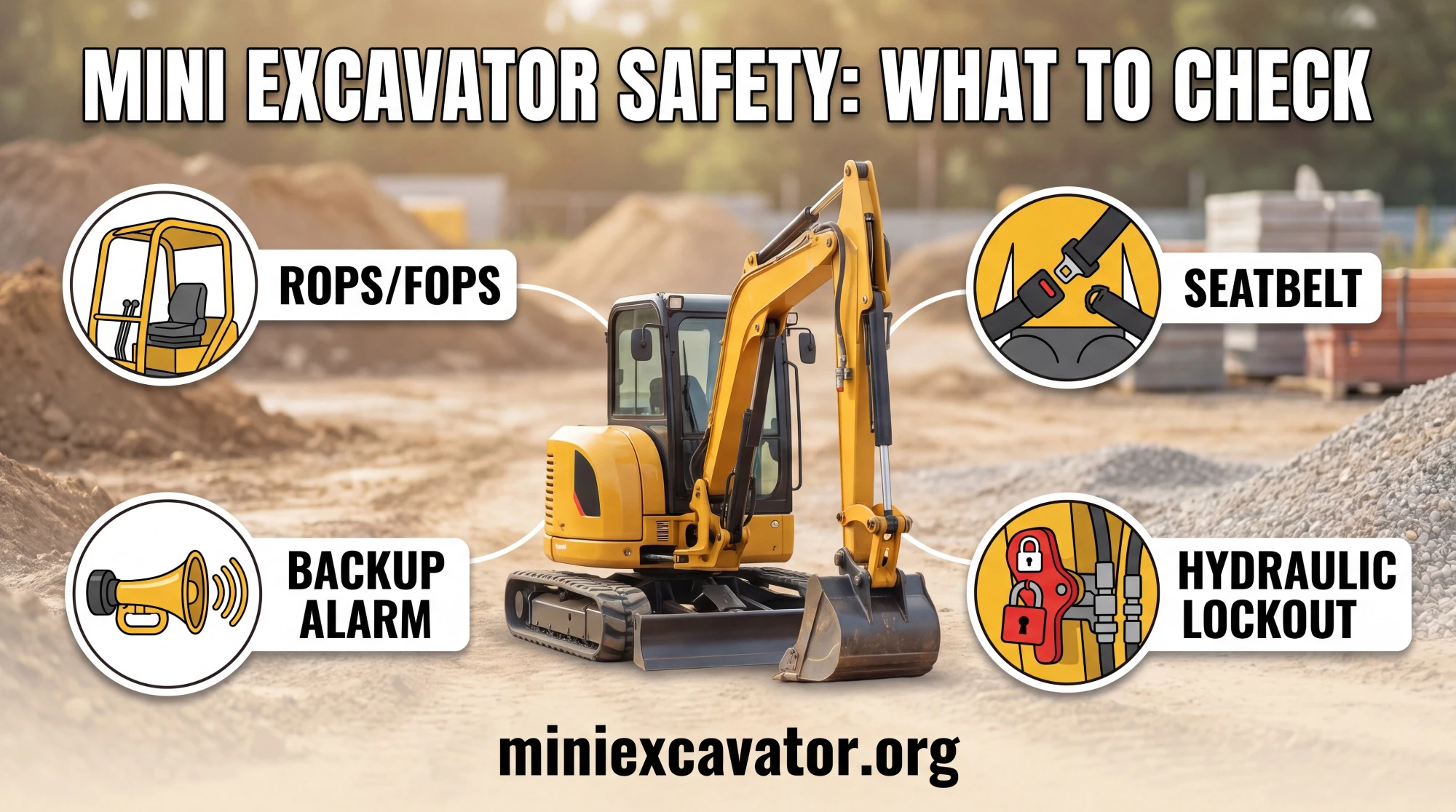
1. ROPS and FOPS Protection
One of the first things every buyer should check is whether the machine has proper ROPS and FOPS protection.
ROPS stands for Roll-Over Protective Structure.
FOPS stands for Falling Object Protective Structure.
These structures are designed to protect the operator if the machine tips over or if debris falls onto the cab or operator zone. On a mini excavator, this is one of the most important protection systems on the machine.
If you are looking at a used mini excavator, inspect the protective structure carefully. Look for damage, cracks, bent areas, poor repairs, or signs of past rollovers. A damaged protective frame should never be ignored.
2. Seatbelt System
A seatbelt may seem basic, but it is one of the most important safety items in the entire machine.
The seatbelt works together with the ROPS system. If a rollover happens, the seatbelt helps keep the operator safely inside the protected zone. Without it, the operator may be thrown out of position and exposed to severe injury.
Check that the seatbelt is present, latches correctly, retracts properly, and is not cut, frayed, or damaged.
3. Hydraulic Lockout Lever
A hydraulic lockout lever is a critical safety feature that prevents accidental machine movement when the operator is entering, exiting, or not actively operating the machine.
When engaged, it disables hydraulic functions so the boom, arm, bucket, and travel controls cannot be moved accidentally. This is extremely important because even an unintended bump of the controls can create a dangerous situation.
Every buyer should confirm that this system works correctly and engages as intended.
4. Emergency Stop Controls
A mini excavator should have a clear and functional emergency stop system or emergency shutdown process. In a dangerous situation, the operator needs to be able to stop the machine quickly and safely.
Check that emergency controls are easy to access, clearly marked, and in working condition.
5. Backup Alarm and Travel Alarm
Mini excavators often work in crowded or active jobsites where workers may be near the machine. A backup alarm helps alert people when the machine is reversing. Some machines also have travel alarms that warn others when the excavator is moving.
These alarms are simple, but they are extremely useful for preventing collisions and improving awareness around the machine.
When inspecting a machine, test the alarms and make sure they are loud enough to be heard clearly.
6. Good Operator Visibility
Visibility plays a major role in safe operation. The operator should be able to see the work area, the blade, the tracks, and the surrounding zone as clearly as possible.
Check for:
- Clear glass or viewing area
- Working mirrors
- Camera systems if equipped
- Minimal blind spots
- Proper lighting for low-light work
Good visibility reduces the risk of hitting obstacles, workers, structures, or utilities.
7. Attachment Locking System
Buckets, breakers, augers, and other tools must be secured properly. A failed attachment connection can create a very dangerous situation.
Inspect the attachment locking system carefully. Make sure the bucket pins, quick coupler, or locking hardware are secure, undamaged, and easy to verify visually. If the machine uses a quick coupler, confirm that it locks fully and holds attachments tightly.
8. Load and Stability Information
Every buyer should check whether the machine includes proper load charts, warning labels, and operating instructions. These help the operator understand the machine’s lifting limits and safe working range.
A mini excavator that is overloaded or used incorrectly on uneven ground can become unstable very quickly. Clear load information helps prevent mistakes that can lead to tipping or structural stress.
9. Operator Controls and Warnings
The controls should be smooth, clearly labeled, and easy to operate. Warning lights, gauges, and indicator systems should all function correctly.
You can also learn more from this guide: Mini excavator controls explained
Check the machine for:
- Warning lights
- Fuel and temperature gauges
- Hydraulic alerts
- Battery indicators
- Fault notifications
A machine that does not warn the operator properly can allow small problems to become safety issues.
10. Lighting and Visibility Aids
Work lights are often overlooked, but they are important when operating in darker conditions, indoors, or near the end of the workday.
Check that front and rear lights work properly and provide enough visibility for safe movement and digging. If the machine includes extra lighting or camera support, that adds even more jobsite value.
Safety Features Are Not Enough Without Safe Practices
Even the best mini excavator safety features cannot protect an operator who ignores safe procedures. A machine should always be used with the right habits and preparation.
That starts before the engine is even turned on.
Best Practices for Mini Excavator Safety
For more operation guidance, read this: How to operate a mini excavator
Do a Pre-Operation Inspection Every Day
Before each shift, inspect the machine for leaks, loose parts, damaged hoses, worn tracks, faulty lights, and problems with the seatbelt or alarms. Safety systems should never be assumed to be working.
Read the Operator’s Manual
Every mini excavator model is different. The operator’s manual explains the machine’s controls, safety systems, load limits, and maintenance schedule. Buyers should always make sure the manual is included.
Always Locate Underground Utilities
Before digging, underground lines must be marked. Striking gas, electric, water, or communication lines can be extremely dangerous and very expensive.
Wear Proper PPE
Operators and nearby workers should wear the right protective gear, including safety boots, high-visibility clothing, eye protection, and a hard hat when required.
Keep Bystanders Clear
The swing area, digging area, and travel path should always be clear. Establish a safe zone around the excavator and prevent unnecessary foot traffic near the machine.
Operate on Stable Ground
Mini excavators are compact, but they can still tip if used carelessly on slopes or unstable surfaces. Work on stable ground whenever possible and follow the manufacturer’s guidance for grades and positioning.
Keep the Load Low While Traveling
If the excavator is moving with material in the bucket, the load should stay low to maintain stability and visibility.
Use the Seatbelt Every Time
A seatbelt only works if the operator actually wears it. This should be a non-negotiable habit.

What Buyers Should Check on a Used Mini Excavator
If you are buying used, safety inspection becomes even more important. Pay close attention to signs that safety systems may have been neglected or damaged.
Check for:
- Damaged ROPS or canopy
- Missing or broken seatbelt
- Non-working alarms
- Cracked glass or poor visibility
- Broken warning lights
- Faulty lockout lever
- Loose or worn attachment coupler
- Missing safety labels
- Poor repairs around the cab or frame
A used machine may still be a good buy, but only if its safety systems are intact and functional.
Why Safety Should Influence Buying Decisions
A buyer may be tempted to compare only price, power, and digging specs. But a machine without proper safety features, or one with poorly maintained safety systems, can cost far more in the long run.
A safer machine helps protect:
- The operator
- Nearby workers
- Surrounding property
- The machine itself
- The project schedule
- The business reputation
That is why safety should be part of the buying decision from the beginning, not something considered after purchase.
Final Thoughts
Mini excavators are excellent machines, but they must be treated with the respect that all heavy equipment deserves. The best buyers do not only ask how deep the machine can dig or how much it can lift. They also ask whether it protects the operator, supports safe use, and includes the safety systems needed for real jobsite conditions.
Before buying, always inspect the ROPS and FOPS structure, seatbelt, hydraulic lockout system, alarms, visibility, attachment locking system, warning indicators, and overall machine condition. Then pair those features with proper training, routine inspection, and safe operating habits.
A mini excavator is only truly valuable when it is both productive and safe.
For compact equipment, mini excavators, and jobsite support, Request a quote or Visit American Excavators.
Frequently Asked Questions
1. What is the most important safety feature on a mini excavator?
There is no single feature that does everything, but the ROPS structure and seatbelt are among the most important because they help protect the operator in the event of a rollover.
2. Why is the hydraulic lockout lever important?
The hydraulic lockout lever prevents accidental movement of the boom, arm, bucket, and other hydraulic functions when the operator is entering, leaving, or not actively using the machine.
3. Do mini excavators need backup alarms?
Yes, backup alarms are very important because they warn nearby workers and pedestrians when the machine is reversing, reducing the risk of collisions.
4. Should I inspect safety features on a used mini excavator before buying?
Yes. You should always inspect safety systems carefully on a used machine, including the seatbelt, alarms, protective structure, warning indicators, and attachment locking system.
5. Is operator training necessary if the machine is small?
Yes. Even though a mini excavator is compact, it is still heavy equipment and can cause serious injury or damage if used incorrectly. Proper training is always important.
6. What should I do before digging with a mini excavator?
Before digging, inspect the machine, confirm the safety systems are working, wear proper PPE, and have underground utilities marked to avoid dangerous strikes.
7. Can safety features replace safe operating habits?
No. Safety features help reduce risk, but they do not replace training, awareness, inspections, and correct jobsite practices. Both the machine and the operator must work together for safe operation.
Need Equipment Help?
Turn the article into a buying decision with product guidance, attachment fit checks, and quote support.