How to Avoid Common Beginner Mistakes When Digging with Excavator

How to Avoid Common Beginner Mistakes When Digging with Excavator
Digging with heavy equipment like a mini excavator or skid steer looks straightforward from the outside, but it demands a blend of precision, patience, and mechanical awareness that takes time to develop. New operators often feel pressure to move dirt fast and prove they can handle the machine, and that pressure is exactly where costly mistakes begin.
The truth is that the most experienced operators are not the ones who dig the fastest. They are the ones who think before they dig, respect the machine’s limits, and understand what lies beneath the surface and around the work area. Building those habits early sets the foundation for a long, safe, and productive career behind the controls.
The good news is that most beginner mistakes follow predictable patterns, which means they are entirely avoidable once you know what to watch for. Steering clear of these foundational errors keeps you safe, protects buried utilities, preserves your machine, and saves you from the kind of expensive lessons that no one wants to learn the hard way.
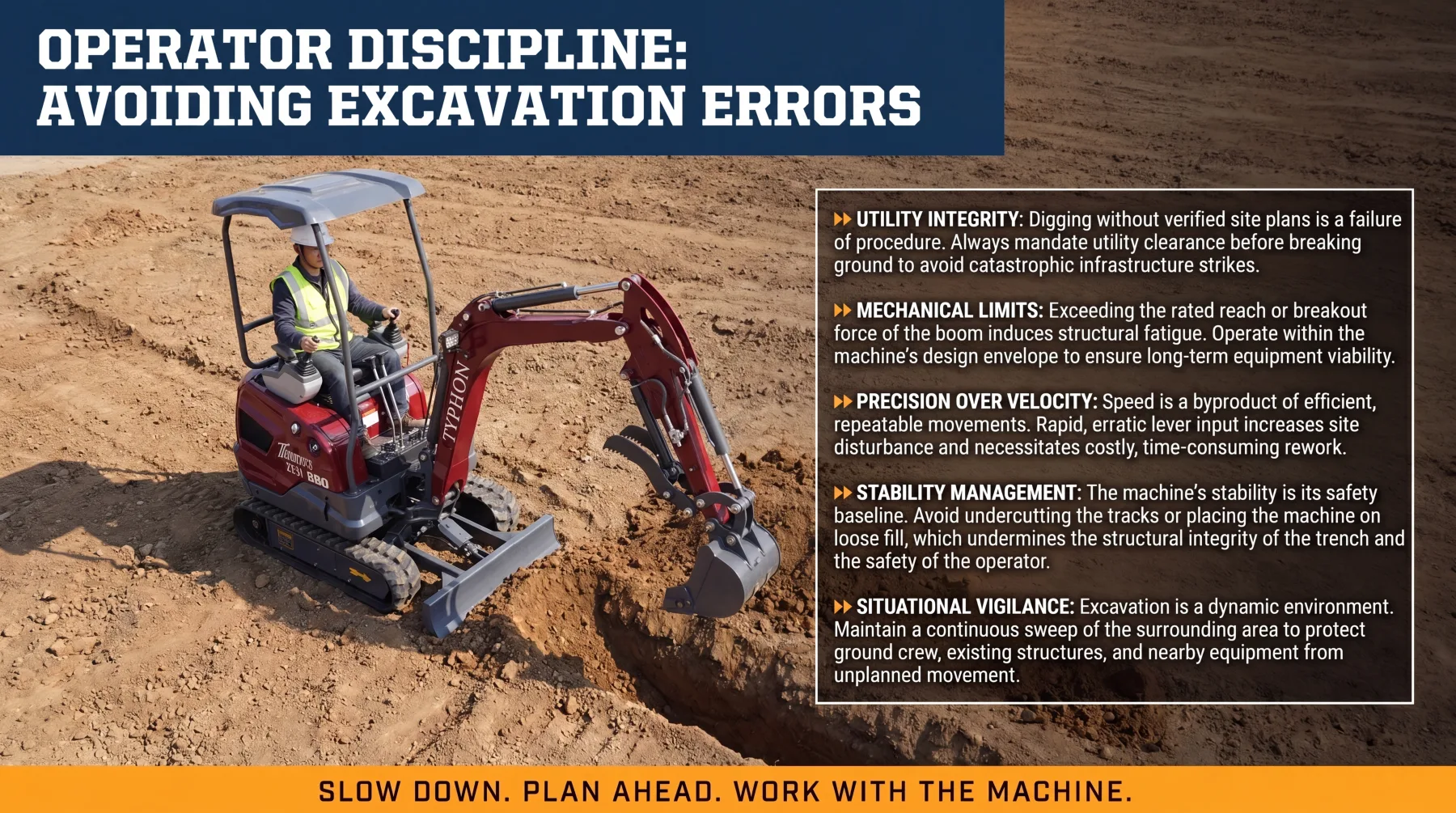
Each mistake covered here ties back to a simple principle: slow down, plan ahead, and work with the machine rather than against it. This guide walks through five of the most common digging mistakes that trip up new operators, explaining why each one matters and how to avoid it.
Need help choosing or operating the right machine? Request a quote or Visit American Excavators.
Failing to Locate Underground Utilities
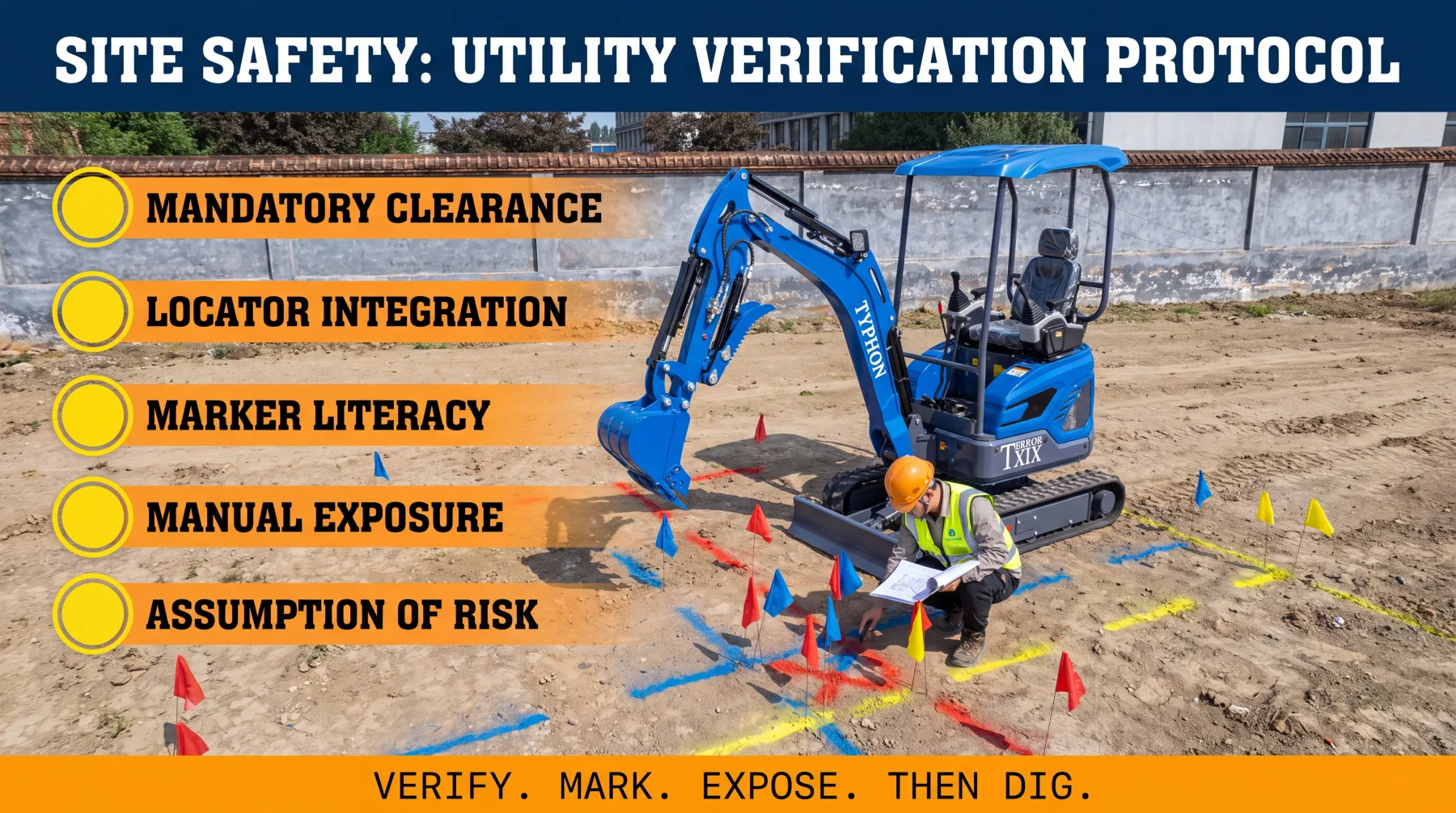
The single most serious mistake any beginner can make is breaking ground before confirming what lies beneath it. Buried gas, water, electric, and fiber-optic lines can cross jobsites in ways that are impossible to predict by sight alone. Striking one can turn an ordinary dig into a dangerous emergency.
Hitting a gas line risks an explosion. Cutting an electric line can be fatal. Severing a water main or fiber cable can bring the project to a complete stop while repair costs, delays, and fines begin to build. No amount of saved time is worth that risk.
Before any bucket touches the dirt, locating utilities must be your first priority on every single job.
The process for protecting yourself is well established and easy to follow:
Contact your local “Call Before You Dig” service at least a few days ahead, as required in your area, so locators have time to respond.
Wait for the area to be clearly marked with paint or flags before you begin any excavation.
Learn the color codes used to identify gas, electric, water, communications, and other underground lines.
Dig carefully near marked lines, using hand tools to expose utilities instead of relying only on the machine.
Never assume an unmarked area is clear, since private lines and older installations are sometimes missed.
The consequences of skipping this step reach far beyond a damaged line. A utility strike can injure or kill you and the people around you, trigger major fines, and leave you or your employer responsible for expensive repairs. It can also expose you to legal liability and damage your reputation before your career even gets going.
Making the utility location call a non-negotiable habit protects your safety, your budget, and your professional standing on every project you take on.
Improper Machine Positioning and Stability
Where and how you position your machine determines how safely and effectively you can dig. New operators often overlook this basic step because they are eager to start moving dirt. The temptation to reach a little farther or start digging on uneven ground without setting up properly can lead to tipping hazards, poor control, and unnecessary strain on the equipment.
A machine that is not stable cannot dig with power or precision. In the worst cases, it can roll or tip over completely. Taking time to establish solid, level footing before you start is one of the clearest signs of an operator who understands the equipment and respects what it can and cannot do.
Set yourself up for safe, controlled digging by following these positioning fundamentals:
Park on solid, level ground whenever possible, and avoid soft or sloped surfaces that compromise stability.
Engage the stabilizers or blade to anchor the machine and keep it planted during the dig.
Work within the machine’s “sweet spot,” the range where you have the most power, balance, and control.
Avoid overreaching, since extending too far shifts the center of gravity and increases the risk of tipping.
Reposition the machine rather than straining to reach material at the edge of its working range.
The sweet spot deserves special attention because it is where the machine performs at its best. Digging too far out forces the hydraulics to work harder for less result and pulls weight away from the machine’s stable base. This raises the risk of a tip-over and reduces digging efficiency.
By keeping your work close enough to maintain power and balance, you dig more efficiently and protect both yourself and the equipment. Moving the machine a few feet to stay in that ideal range costs only a moment, while a tip-over or strained component can cost far more in downtime, repairs, and safety risk.
Stability is the foundation every other digging skill builds on.
Digging Blind or Without a Plan
Jumping into a dig without a clear plan is a mistake that wastes time, material, and money. It is also one of the most common errors among new operators who are eager to get moving.
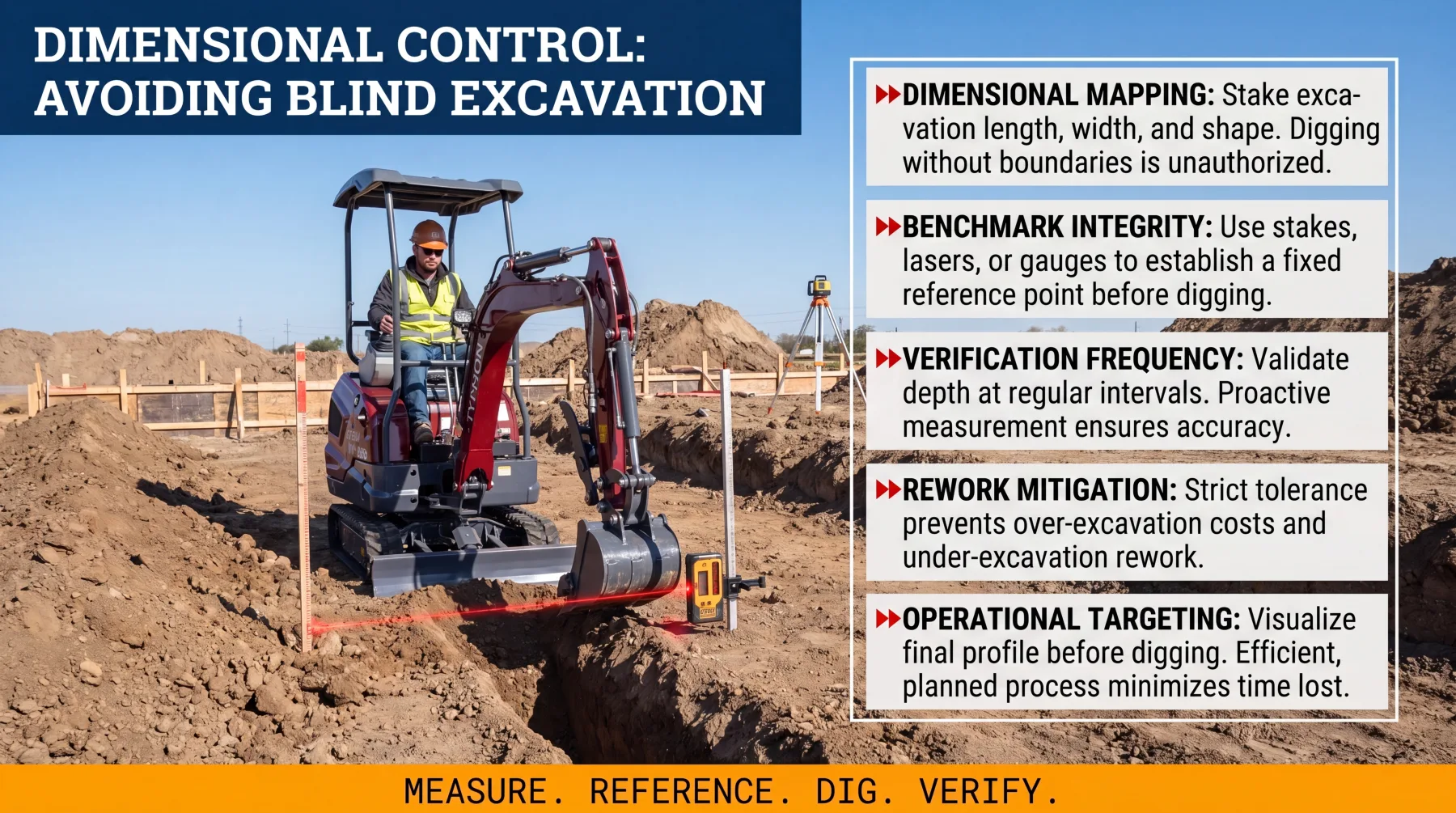
Digging “blind” means working without marked dimensions, a confirmed depth, grade reference points, or a clear understanding of what the finished excavation should look like. This almost always leads to over-excavation, missed specifications, uneven results, and rework that could have been avoided.
A few minutes of planning before you start can save hours of correction later. Professional results come from knowing exactly what you are trying to achieve before the bucket enters the ground, then checking your progress against that target as you go.
Approach every dig with a clear plan built around these steps:
Stake out the work area to mark the precise length, width, and shape of the excavation.
Confirm the required depth from the project plans before you begin removing material.
Check your depth regularly with a laser level, depth gauge, or measuring tool as the dig progresses.
Mark grade and reference points so you have a consistent benchmark to measure against.
Avoid over-excavating, since digging too deep often means hauling in fill to correct the mistake.
The cost of digging without a plan adds up quickly. Over-excavation means you remove more material than needed, then spend additional time and money bringing material back in to reach the correct grade. Falling short of the specified depth means going back to dig again. An uneven bottom can also compromise whatever is built above it.
Checking your depth frequently with a reliable tool keeps you on target and removes the guesswork that leads to errors. Taking time to stake out dimensions and verify your work as you go helps ensure you meet the project specifications the first time.
That keeps the job efficient, accurate, and profitable instead of slowed down by avoidable corrections.
Overworking the Hydraulic System
The hydraulic system is the source of your machine’s strength, and treating it with respect is essential to keeping that strength available for the long haul.
New operators frequently overwork hydraulics without realizing the damage they are doing. This often happens by dead-heading the controls or by trying to force the machine to do work it was never rated to handle.
Dead-heading happens when you push a joystick to its absolute mechanical limit and hold it there after the cylinder has reached the end of its travel. This sends a sharp pressure spike through the hydraulic system and can strain hoses, seals, valves, cylinders, and pumps.
Using the machine to pry apart large rocks, stumps, or buried obstacles beyond its capacity puts similar stress on components designed for digging, not demolition. Smooth, deliberate operation is the key to protecting these expensive systems.
Protect your hydraulics by operating with care and awareness:
Use smooth, consistent movements rather than jamming the joysticks to their stops.
Avoid dead-heading by easing off the controls as a cylinder reaches the end of its travel.
Do not pry large obstacles the machine is not rated to handle, since this strains every component.
Listen to the machine, and stop if it begins to groan, labor, or slow under the load.
Reassess your approach when something feels too hard instead of forcing the machine through it.
Paying attention to how the machine sounds and feels is one of the most valuable skills an operator can develop. When a stubborn rock, root, or heavy material makes the machine struggle, that strain is a warning, not a challenge to push harder.
Forcing the issue can blow a hydraulic hose, bend a cylinder rod, damage a pump, or pull the machine off the job for costly repairs. Backing off, breaking the work into smaller bites, or repositioning for a better angle often solves the problem without damage.
Operating with a smooth, patient touch keeps your hydraulics healthy and your machine working reliably day after day.
Ignoring Cleanup and Soil Management
Managing the material you dig out is just as important as the digging itself. Soil management is something beginners often ignore until it creates a problem.
Placing excavated dirt, known as spoils, too close to the edge of a hole or piling it carelessly can undermine the excavation, block your own movement, and create hazards across the work area. A messy, unplanned spoil pile slows you down and can even cause the hole you just dug to collapse.
Thinking about where your material will go before you start digging keeps the jobsite organized, safe, and efficient from start to finish.
Keep your work area safe and workable by planning your spoils with these practices:
Decide where spoils will go before you begin instead of piling material wherever it falls.
Keep the pile back from the edge of the hole to prevent the walls from collapsing.
Leave room to maneuver so the machine can move and reposition without obstruction.
Separate different materials when topsoil, subsoil, or fill need to be reused or hauled away.
Maintain clear access for trucks, crew, and other equipment around the excavation.
The reason edge clearance matters so much comes down to weight and pressure. A heavy spoil pile placed right at the lip of a hole adds load to the soil at the most vulnerable point. That pressure can cause the wall to cave in, burying tools, damaging equipment, or even endangering a worker.
Keeping the pile a safe distance back removes that pressure and protects the integrity of the excavation. Good soil management also keeps your workspace open, so you are not constantly fighting your own dirt to position the machine or complete the dig.
Planning your spoils in advance turns a potential source of hazards and delays into a smooth, controlled part of the operation. It reflects the kind of foresight that defines a skilled, professional operator.
Conclusion
Learning to dig with heavy equipment is a process, and avoiding these five common mistakes will put you well ahead of where most beginners start.
Each mistake comes back to the same core principles: plan before you dig, respect what lies below and around you, and work with the machine instead of forcing it.
Locating underground utilities protects lives and saves you from devastating fines and repair bills. Setting up on level ground and staying within your machine’s sweet spot keeps you stable and in control. Staking out your work and checking your depth keeps every dig accurate and efficient. Operating the hydraulics with a smooth, patient touch preserves the strength your machine depends on. Planning your spoil placement keeps the jobsite safe, open, and organized.
None of these habits require special talent or years of experience to adopt. They simply require the discipline to slow down and do things the right way every single time, even when you feel pressure to rush.
Make these practices part of how you approach every job from the beginning, and they will quickly become second nature. Over time, they form the foundation of steady, confident, professional operation.
Take pride in working carefully, learn something from every dig, and never let the temptation to cut corners override your judgment. Build your skills on this solid base, and you will protect yourself, your equipment, and your reputation while delivering reliable, high-quality work for years to come.
For excavators, attachments, and equipment support, Request a quote or Visit American Excavators.
Watch the Video
Need Equipment Help?
Turn the article into a buying decision with product guidance, attachment fit checks, and quote support.